
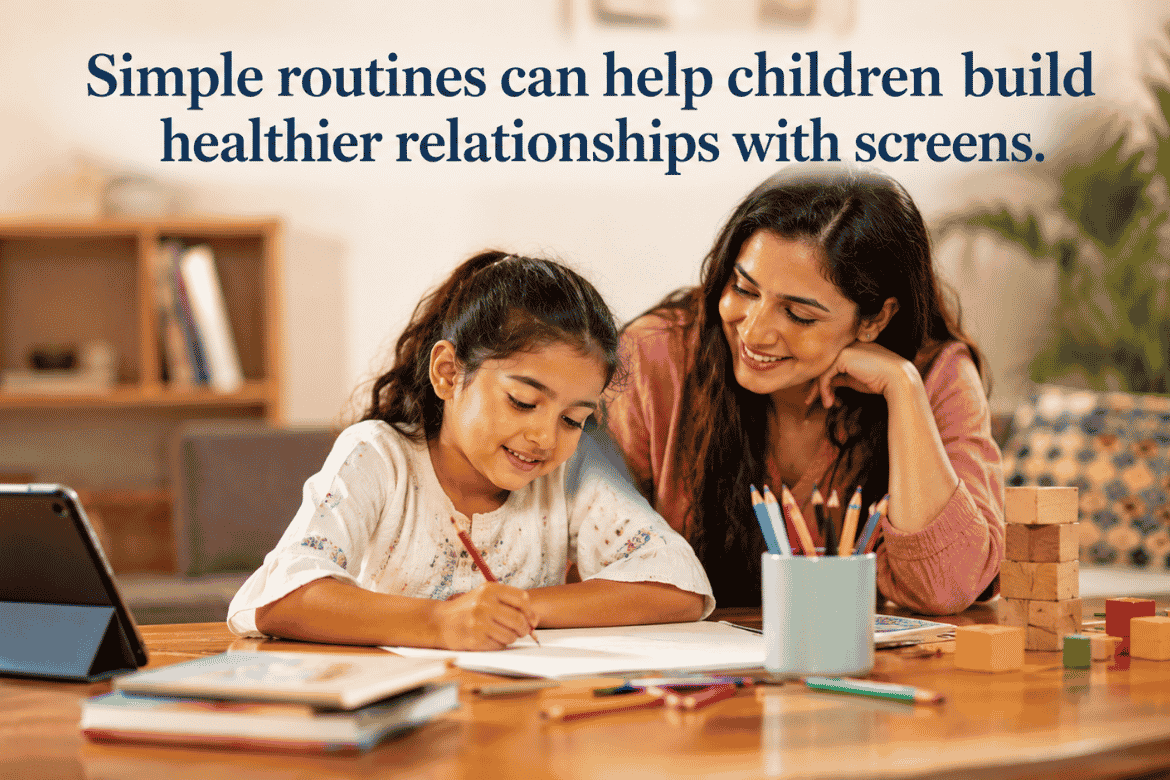
How to Create Screen-Free Time for Kids: 10 Practical Tips
How to Create Screen-Free Time for Kids: 10 Practical Tips
Introduction: Creating Screen-Free Time Without Constant Battles
Creating screen-free time for kids doesn’t have to mean taking every device away and declaring a technology ban.
In fact, sudden restrictions can sometimes turn screen use into a daily battle.
A more sustainable approach is to create predictable routines where screens have a place — but so do reading, outdoor play, creativity, family interaction, rest and boredom.
The goal is not:
“No screens.”
The goal is:
“Screens are one part of childhood, not the whole childhood.”
The American Academy of Pediatrics recommends creating family media plans that reflect each family’s routines and values, including screen-free zones, alternative activities and regular review of the plan as children grow.
1. Start With One Screen-Free Period
Don’t try to change everything at once.
Choose one predictable period.
For example:
After school → 30 minutes screen-free
or
Dinner → no phones or tablets
or
Before bedtime → screen-free routine
Once that becomes normal, you can gradually expand it.
Consistency is usually more useful than extreme restrictions that are difficult to maintain.
The American Academy of Pediatrics’ family media plan can also help parents create realistic and consistent technology boundaries at home.
2. Create Screen-Free Zones at Home
Some areas of the home can naturally become screen-free.
Consider:
- Dining table
- Bedroom during bedtime
- Family conversation areas
- Homework spaces
The American Academy of Pediatrics specifically recommends screen-free zones such as the dinner table, during homework and before bed.
This makes the rule easier for children to understand.
Instead of:
“You can’t use your phone right now.”
the rule becomes:
“We don’t use devices at the dinner table.”
It’s a family habit rather than a punishment.
3. Give Transition Warnings
One of the hardest moments for many families is:
“Turn it off NOW.”
A child who is deeply involved in a game or video may experience that sudden interruption as frustrating.
Instead, give warnings.
Try:
“You have 15 minutes left.”
Then:
“Five more minutes.”
Then:
“When this ends, we’re putting the tablet away.”
Predictability can make transitions easier.
The American Academy of Pediatrics notes that screen transitions can trigger strong emotional reactions and recommends strategies that support healthier technology routines.
4. Give Children Something to Move Toward
Removing a screen creates an empty space.
If you don’t know what will fill that space, the child will naturally ask:
“Now what?”
Prepare alternatives.
For example:
- Drawing
- Lego or building blocks
- Puzzles
- Reading
- Outdoor play
- Board games
- Crafting
- Music
- Pretend play
- Helping in the kitchen
- Gardening
The American Academy of Pediatrics recommends making room for reading, outdoor play, family games and hobbies within family media plans.
5. Create an “I’m Bored” Jar
This is one of the easiest strategies to try.
Take a jar.
Write simple activities on small pieces of paper.
Examples:
Creative ideas
- Draw a superhero
- Make a paper airplane
- Build a cardboard house
- Create a comic
Movement ideas
- Go outside
- Make an obstacle course
- Dance to three songs
- Play catch
Family ideas
- Play a board game
- Help make a snack
- Tell a funny story
- Do a puzzle together
When your child says:
“I’m bored!”
you can respond:
“Choose one.”
The American Academy of Pediatrics has also recommended the idea of an “I’m bored” jar as one practical way to help children move away from automatic screen use.
6. Don’t Over-Schedule the Replacement
This is important.
Parents sometimes remove screens and immediately replace them with:
- Tuition
- Classes
- Worksheets
- Activities
- Coaching
- Structured games
But children also need unstructured time.
If every minute is planned, children don’t get to practise deciding what they want to do.
Leave some empty space.
Then let the child fill it.
Unstructured activities can also provide opportunities for children to practise skills such as attention, planning, flexible thinking and self-regulation. The Harvard Center on the Developing Child’s resources on executive function explain how these skills develop through practice and interaction.
7. Make Creativity Easy to Access
If art supplies are hidden in a cupboard that requires adult help, children are less likely to use them independently.
Create an accessible activity area.
Keep things such as:
- Paper
- Colour pencils
- Crayons
- Clay
- Blocks
- Books
- Puzzles
- Cardboard
- Stickers
within reasonable reach.
The environment itself can encourage screen-free play.
8. Let Your Child Be Bored
This can be difficult for parents.
Your child says:
“I’m bored!”
You immediately hear:
“I need you to fix this.”
But you don’t always have to fix it.
Try:
“I know you’re bored. You can decide what you’d like to do.”
Then wait.
Your child may complain.
They may walk around.
They may say there is “nothing to do.”
And then suddenly:
They start drawing.
They build something.
They create a game.
They go outside.
They start talking to a sibling.
That transition is part of learning.
9. Model Healthy Screen Habits Yourself
Children notice what adults do.
If parents constantly check their phones during:
- Meals
- Conversations
- Waiting
- Driving
- Family time
children receive a message about how technology should be used.
Healthy digital habits need to include adults too.
The American Academy of Pediatrics recommends making a family media plan for every member of the family, including parents and caregivers.
Ask yourself:
“Would I want my child to copy my current phone habits?”
If the answer is uncomfortable, that’s useful information.
10. Build a Family Media Plan
Instead of making random rules every day, create a simple family agreement.
Decide together:
When can screens be used?
For example:
After homework.
After outdoor play.
During a specific leisure period.
Where are screens not used?
For example:
Dining table.
Bedrooms at bedtime.
During family conversations.
What happens when screen time ends?
The device goes to a charging location.
Another activity begins.
What content is allowed?
Age-appropriate content.
Educational or creative content.
Content parents are comfortable with.
The American Academy of Pediatrics recommends revisiting family media plans as children grow and their routines change.
What If My Child Gets Angry When the Screen Is Removed?
First, remember:
A strong reaction doesn’t automatically mean something is seriously wrong.
Transitions can be difficult.
Try to avoid turning every transition into a negotiation.
Instead:
- Give advance notice.
- Keep the boundary predictable.
- Stay calm.
- Acknowledge the emotion.
- Offer the next activity.
- Avoid lengthy arguments.
You can say:
“I know you want to keep playing. It’s difficult to stop when you’re having fun. The tablet is going away now. You can choose drawing or going outside.”
You’re acknowledging the feeling without changing the boundary.
What If My Child Says Every Other Child Has a Phone?
This is one of the most common parenting arguments.
Instead of responding:
“I don’t care what other children do.”
try:
“Different families have different rules. Our family has decided this is what works for us.”
Children may still disagree.
That’s okay.
Healthy boundaries don’t require children to agree with every decision.
What If Screens Are My Child’s Main Way to Calm Down?
This deserves a closer look.
Screens can become a powerful emotional regulation tool.
A child may learn:
“I’m upset → screen.”
“I’m anxious → game.”
“I’m angry → YouTube.”
“I’m bored → tablet.”
Digital entertainment can provide immediate distraction.
But children also need opportunities to develop other ways of managing uncomfortable feelings.
These may include:
- Talking
- Movement
- Breathing
- Creative activities
- Connection
- Quiet time
- Problem-solving
- Sensory activities
The objective isn’t to take away every coping tool.
It is to help children develop more than one.
When Screen Use May Need Professional Support
Parents should consider professional guidance when screen use is consistently associated with significant difficulties such as:
- Major disruption to sleep
- Persistent conflict at home
- Withdrawal from other activities
- Difficulty functioning without a device
- Significant emotional or behavioural changes
- School difficulties
- Social withdrawal
- Strong and persistent distress around screen limits
These signs do not automatically mean a child has a clinical disorder.
They simply suggest that it may be helpful to understand what is happening underneath the behaviour.
Prayatna Counselling’s child services include behavioural therapy, occupational therapy, speech therapy, remedial education and early intervention.
What If Screen Use Is Not the Real Problem?
Sometimes the screen is the easiest place to see the problem.
But the underlying issue may be something else.
A child might use screens excessively because they are:
- Lonely
- Anxious
- Struggling academically
- Having difficulty making friends
- Overwhelmed
- Bored
- Avoiding difficult emotions
- Experiencing family stress
So instead of asking only:
“How do I get my child off the screen?”
ask:
“What does my child get from the screen?”
That question can lead to a much more useful conversation.
A Simple 7-Day Screen-Free Challenge
You don’t need to completely redesign your family’s lifestyle.
Try this for seven days.
Day 1
Create one screen-free meal.
Day 2
Add 30 minutes of screen-free play.
Day 3
Create an “I’m bored” jar.
Day 4
Make one room a screen-free zone.
Day 5
Spend 30 minutes outdoors together.
Day 6
Have a family game or creative activity.
Day 7
Review what worked and create your family media plan.
The goal isn’t perfection.
The goal is awareness and balance.
How Prayatna Counselling Supports Children and Families
Prayatna Counselling provides support across child development, behavioural needs, emotional wellbeing and early intervention.
Our services include:
- Behavioural Therapy
- Occupational Therapy
- Speech Therapy
- Remedial Education
- Early Intervention
Explore our Child Services:
You can also learn about our Early Intervention Services:
If you want to understand our broader counselling and psychological services, visit:
https://prayatnacounselling.com/
Conclusion: Balance, Not Bans
Healthy screen habits don’t require a technology-free childhood.
Children can enjoy technology.
They can play games.
They can watch videos.
They can use educational apps.
They can explore digital creativity.
But they also need something technology cannot completely replace:
Real-world childhood.
They need movement.
They need relationships.
They need conversation.
They need creativity.
They need independent play.
They need quiet.
And sometimes:
They need to be bored.
The goal of screen-free time for kids isn’t to remove technology.
It is to make sure there is still enough space for childhood to happen.
Frequently Asked Questions
How do I reduce screen time without fighting with my child?
Start gradually. Create predictable screen-free periods, give transition warnings and provide appealing alternatives instead of relying only on restrictions.
What are good screen-free activities for kids?
Drawing, reading, outdoor play, puzzles, building, crafts, pretend play, board games, music and helping with age-appropriate household activities are good options.
Should I allow screens when my child is bored?
You don’t have to respond to every moment of boredom with a screen. Give your child an opportunity to decide what they want to do.
How can I make my child play independently?
Create an accessible environment with books, art materials, blocks, puzzles and open-ended toys. Start with short periods and gradually increase them.
What should I do if my child becomes angry when screen time ends?
Use predictable limits, advance warnings and calm transitions. Acknowledge the child’s frustration without automatically changing the boundary.
When should I consult a child psychologist?
If screen use is consistently affecting your child’s sleep, school, relationships, behaviour, emotional wellbeing or daily functioning, professional guidance may be useful.
Related Posts

Snapchat Dysmorphia: How AR Filters Are Rewiring How Young People See Themselves
Introduction: The Face You See in the Mirror Isn't Yours Anymore There is a face...

Sustainable Board Prep: Study Hard Without Burning Out (Smart Strategy for Board Exams 2026)
Sustainable Board Prep: Study Hard Without Burning Out (Smart Strategy for Board...

The “Bed Rotting” Paradox: Self-Care or a Slow Slide Into Depression?
When Your Bed Becomes Both Sanctuary and Trap If you've scrolled TikTok in the...

Childhood Bullying vs Normal Conflict: Why Mislabeling Everyday Disagreements Can Harm Children
Childhood Bullying vs Normal Conflict: How to Tell the Difference...