
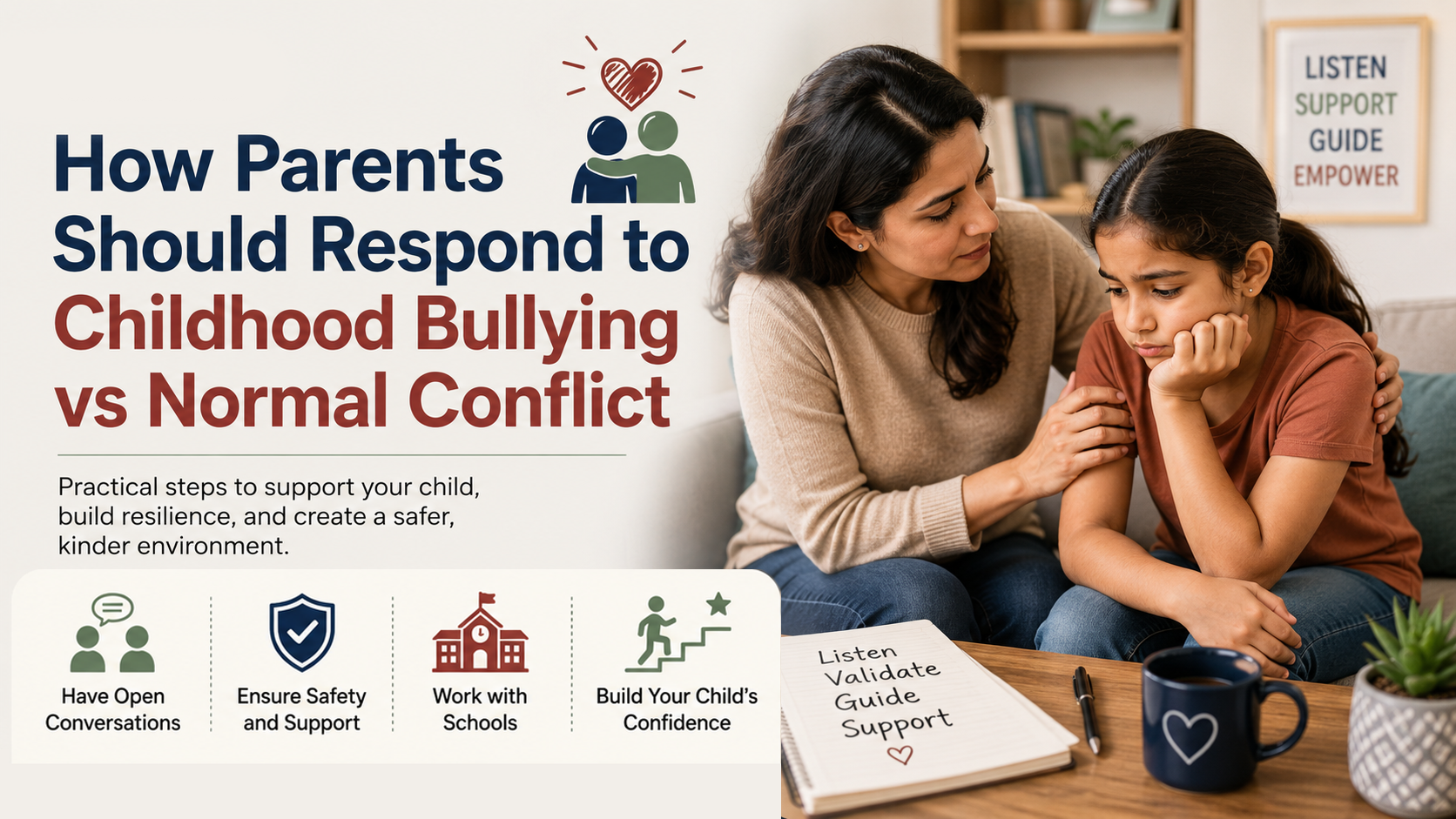
How to Respond to Childhood Bullying: A Parent’s Complete Guide
Respond to Childhood Bullying: A Parent’s Complete Guide
Introduction
Childhood bullying support begins with understanding your child’s emotional needs rather than reacting immediately. Respond to childhood bullying with calm, confidence, and the right support instead of reacting with fear or anger. Parents often struggle to know when to step in, when to encourage independence, and when professional help is needed. Learning how to respond to childhood bullying helps children feel emotionally safe while building resilience, communication skills, and healthy ways to navigate difficult relationships.
If you haven’t already, read our first guide, Childhood Bullying vs Normal Conflict: How to Tell the Difference, to understand when everyday disagreements become genuine bullying.
How to Respond to Childhood Bullying While Building Emotional Resilience
Effective childhood bullying support focuses on rebuilding confidence, emotional safety, and healthy communication. When your child tells you they are being bullied, your first reaction may be anger, fear, or a desire to solve the problem immediately. While these emotions are natural, children benefit most when parents respond with calm reassurance rather than panic.
Instead of asking:
“Who did this?”
Try asking:
- Can you tell me exactly what happened?
- Has this happened before?
- How did you feel?
- How did you respond?
- What do you think would help?
Listening first allows children to feel heard while giving parents a clearer understanding of the situation before taking action.
According to the Child Mind Institute, children benefit when parents remain calm, validate their feelings, and work collaboratively with schools rather than reacting impulsively.
Helping Children Build Emotional Resilience
One of the most important goals is not only to stop bullying but also to help children develop lifelong emotional resilience.
Parents can encourage children to:
- Speak confidently and respectfully.
- Identify trusted adults they can approach.
- Build healthy friendships.
- Practice assertive communication.
- Develop problem-solving skills.
- Understand that asking for help is a strength.
Children who feel emotionally supported are often better equipped to recover from difficult social situations.
If your child struggles with confidence, anxiety, or peer relationships, our Child Counselling services provide personalised support to strengthen emotional wellbeing and social skills.
When Schools Should Respond to Childhood Bullying
Parents, teachers, and counsellors should work together to provide consistent childhood bullying support. Parents should contact teachers or school authorities when bullying becomes repetitive, intentional, or begins affecting a child’s emotional wellbeing.
Schools should be informed if:
- The bullying continues despite your child’s efforts.
- Physical aggression occurs.
- Online or cyberbullying develops.
- Your child refuses to attend school.
- Academic performance declines.
- Emotional distress becomes noticeable.
Working together with teachers creates a stronger support system for the child while helping schools address bullying appropriately.
According to UNICEF, maintaining open communication between children, parents, and schools is one of the most effective ways to prevent bullying from escalating.
When to Seek Professional Help to Respond to Childhood Bullying
Sometimes the emotional impact of bullying continues even after the incidents stop.
Consider speaking with a child psychologist if your child experiences:
- Persistent anxiety
- School refusal
- Frequent crying
- Withdrawal from friends
- Panic before school
- Sleep disturbances
- Low self-esteem
- Ongoing fear of social situations
Professional counselling helps children process difficult experiences, rebuild confidence, and develop healthy coping strategies.
Our Family Counselling services also help parents better understand their child’s emotional needs while strengthening communication at home.
Respond to Childhood Bullying After the Incident
Recovery does not happen overnight.
Children need ongoing reassurance that:
- They are not to blame.
- Their feelings are valid.
- They can always ask for help.
- They are capable of building healthy friendships.
- Difficult experiences do not define who they are.
Simple daily conversations, quality family time, and consistent emotional support make a lasting difference in a child’s recovery.
The American Academy of Pediatrics recommends documenting repeated incidents, maintaining communication with schools, and seeking professional support when bullying begins affecting a child’s mental health or daily functioning.
Conclusion
Learning how to respond to childhood bullying is one of the most valuable skills parents can develop. Children don’t need adults to solve every problem—they need caring adults who listen, guide, protect, and empower them.
When parents respond with empathy, patience, and appropriate action, children become more resilient, emotionally secure, and confident in handling life’s challenges.
If you’re concerned about your child’s emotional wellbeing, the experienced psychologists at Prayatna Counselling are here to support you with compassionate, evidence-based care tailored to your family’s needs.
Book a Counselling Session
If your child is struggling with bullying, anxiety, confidence issues, or peer relationships, we’re here to help.
Book a Counselling Session:
https://prayatnacounselling.com/contact-us/
Frequently Asked Questions
How should parents respond to childhood bullying?
Parents should remain calm, listen carefully, validate their child’s feelings, gather accurate information, and work with schools when necessary.
Should children always fight back against bullying?
No. Children should be encouraged to stay safe, seek help from trusted adults, and use assertive communication rather than physical aggression.
When should I contact the school?
If bullying is repeated, intentional, or affecting your child’s emotional wellbeing or education, involve the school promptly.
Can counselling help children recover from bullying?
Yes. Child counselling helps children rebuild confidence, process emotions, improve coping skills, and strengthen resilience after bullying experiences.
Related Posts

Screen-Free Time for Kids: Why Boredom Matters for Child Development
Screen-Free Time for Kids: Why Boredom Matters for Child Development...

Parasocial Grief: Why Losing a Celebrity or Fictional Character Feels Like Losing a Friend
Introduction: You Didn't Know Them. So Why Does It Hurt So Much? Maybe it was...

When Should Parents Seek Professional Help for Academic Avoidance?
When Should Parents Seek Professional Help for Academic Avoidance? “Not every...

Burnout Is Not Laziness: Early Signs, Emotional Impact & When to Seek Counseling
Burnout Is Not Laziness: Early Signs, Emotional Impact & When to Seek...