
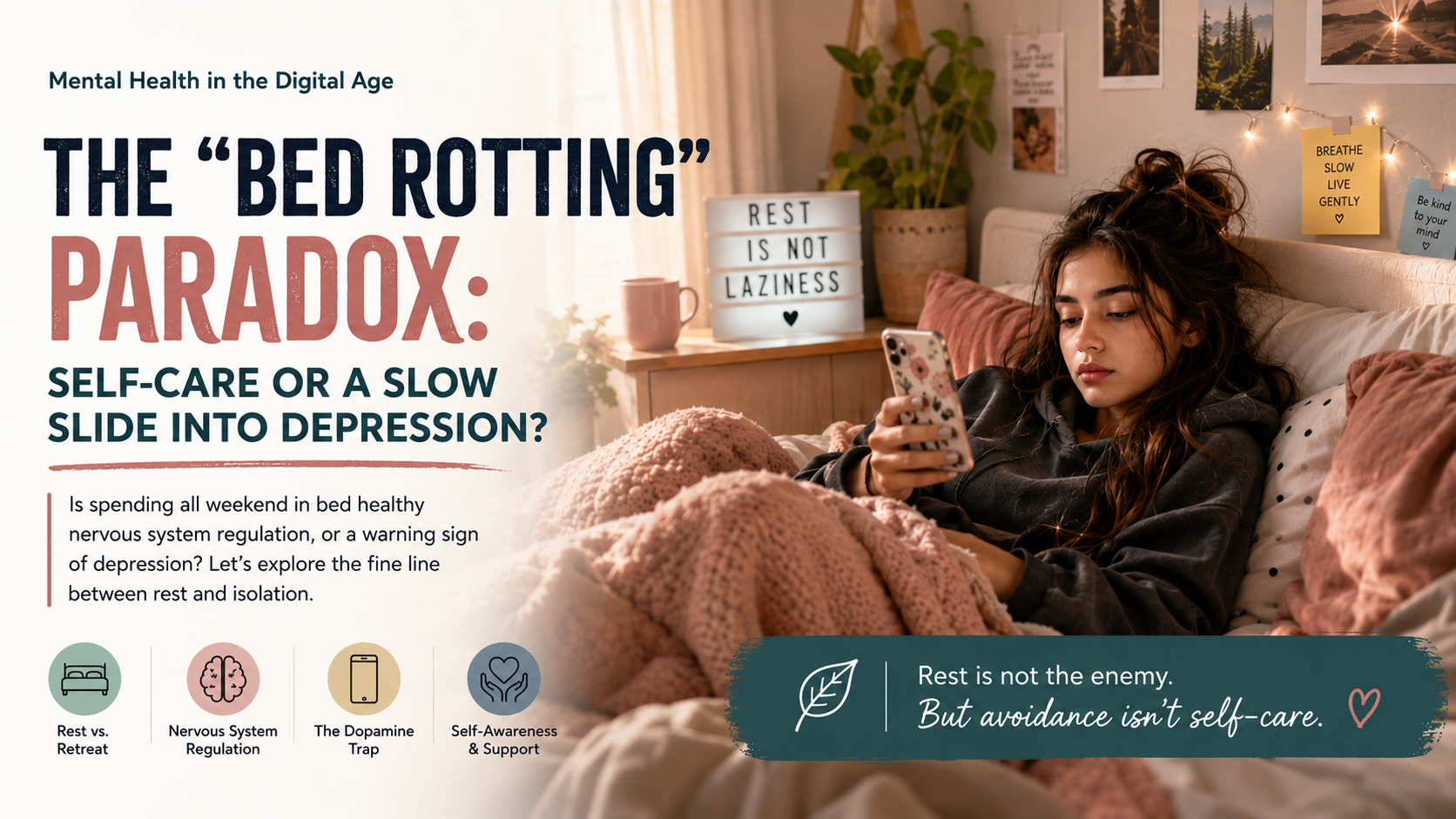
The “Bed Rotting” Paradox: Self-Care or a Slow Slide Into Depression?
When Your Bed Becomes Both Sanctuary and Trap
If you’ve scrolled TikTok in the past year, you’ve likely seen it — someone proudly declaring they spent the entire weekend in bed, unbothered, curtains drawn, doing absolutely nothing. The hashtag #BedRotting has accumulated hundreds of millions of views, and Gen Z has essentially canonized horizontal laziness as a wellness practice.
But here at Prayatna Mentaverse, we believe that between every viral trend and every lived human experience, there’s a conversation worth having. So let’s ask the real question: Is bed rotting a legitimate form of nervous system regulation — or is it a warning sign dressed up as self-care?
What Is ‘Bed Rotting,’ Exactly?
Bed rotting refers to the intentional practice of spending extended periods in bed — often an entire day or weekend — doing low-effort activities like scrolling your phone, watching shows, eating snacks, and sleeping on and off. Unlike traditional rest or sleep recovery, it’s characterized by a deliberate disengagement from productive or social obligations.
Proponents frame it as a radical act of rest in a hustle-obsessed culture. Critics call it avoidance behavior with a wellness rebrand. Both might be right.
The Science Behind Rest: When Doing Nothing Is Actually Something
To understand bed rotting, we first need to understand what genuine nervous system regulation looks like. Our autonomic nervous system operates in two primary modes:
- Sympathetic (fight-or-flight): Activated during stress, deadlines, social demands
- Parasympathetic (rest-and-digest): Activated during safety, calm, and recovery
For people running on chronic stress — and that’s most of us — dropping into parasympathetic mode is genuinely therapeutic. The body needs periods of low stimulation to repair, consolidate memory, regulate cortisol, and restore emotional resources.
Research in polyvagal theory, pioneered by Dr. Stephen Porges, confirms that the nervous system requires real downtime to regulate itself. In this context, a slow, undemanding day in bed is not laziness — it’s biology.
From Prayatna Mentaverse’s perspective: If you’ve had a week of social overwhelm, intense work pressure, or emotional strain, a day of deliberate, guilt-free rest is not just acceptable — it can be genuinely restorative.
When Rest Becomes Retreat: The Warning Signs
Here’s where the paradox deepens. For some people, bed rotting isn’t nervous system regulation — it’s nervous system avoidance. Consider the difference:
Restorative Rest
- You feel refreshed or lighter after
- It’s a choice, not a compulsion
- You re-engage with life relatively easily afterward
- It happens occasionally, typically after depletion
Depressive Withdrawal
- You feel worse, more sluggish, or guilty after
- Getting out of bed feels impossible, not optional
- The isolation is growing, not shrinking
- It’s becoming your default state, not an exception
Depression, particularly in its atypical presentations, often masquerades as fatigue, low motivation, and a desire for solitude. For young people especially, the cultural normalization of ‘not wanting to do anything’ can delay recognition of what’s actually a mood disorder requiring support.
The Dopamine Trap Hidden in the Duvet
There’s another layer to this conversation: what you’re doing in bed matters as much as being in bed. Passive scrolling, doomscrolling, and bingeing content while bed rotting activates the brain’s reward system in short, low-quality bursts. This isn’t the same as genuine rest — it keeps the nervous system slightly activated while preventing meaningful restoration.
Studies on passive social media use consistently link it to lower mood and increased anxiety. So a day of ‘bed rotting + TikTok’ may leave you more depleted than when you started, creating a cycle: you feel more tired, so you stay in bed longer, so you scroll more, so you feel worse.
Ask Yourself These 4 Questions
- Is this rest toward something (recovery, renewal), or rest away from something (life, people, responsibility)?
- Do I feel better or worse after these extended rest periods?
- Has this become my main coping mechanism?
- Am I canceling things I used to look forward to?
When to Reach Out
If bed rotting has shifted from occasional recharge to your primary way of navigating the world, it may be time to speak with a mental health professional. At Prayatna Mentaverse, our counselors specialize in exactly these kinds of nuanced, modern mental health challenges.
- Persistent low mood lasting more than two weeks
- Inability to feel pleasure in things you used to enjoy
- Increasing social withdrawal
- Difficulty meeting basic responsibilities
The goal isn’t productivity at all costs. The goal is a life you can re-enter after you’ve rested.
Related Posts

Why Am I Attracting Narcissistic Partners?
If You Keep Ending Up With Narcissistic Partners, It’s Not a Coincidence Many...

TikTok Therapy & The Self-Diagnosis Epidemic: Finding Your Label vs. Pathologizing Being Human
Introduction: When the Algorithm Becomes Your Therapist 'Wait — that's literally...

Sustainable Board Prep: Study Hard Without Burning Out (Smart Strategy for Board Exams 2026)
Sustainable Board Prep: Study Hard Without Burning Out (Smart Strategy for Board...

Parasocial Grief: Why Losing a Celebrity or Fictional Character Feels Like Losing a Friend
Introduction: You Didn't Know Them. So Why Does It Hurt So Much? Maybe it was...