
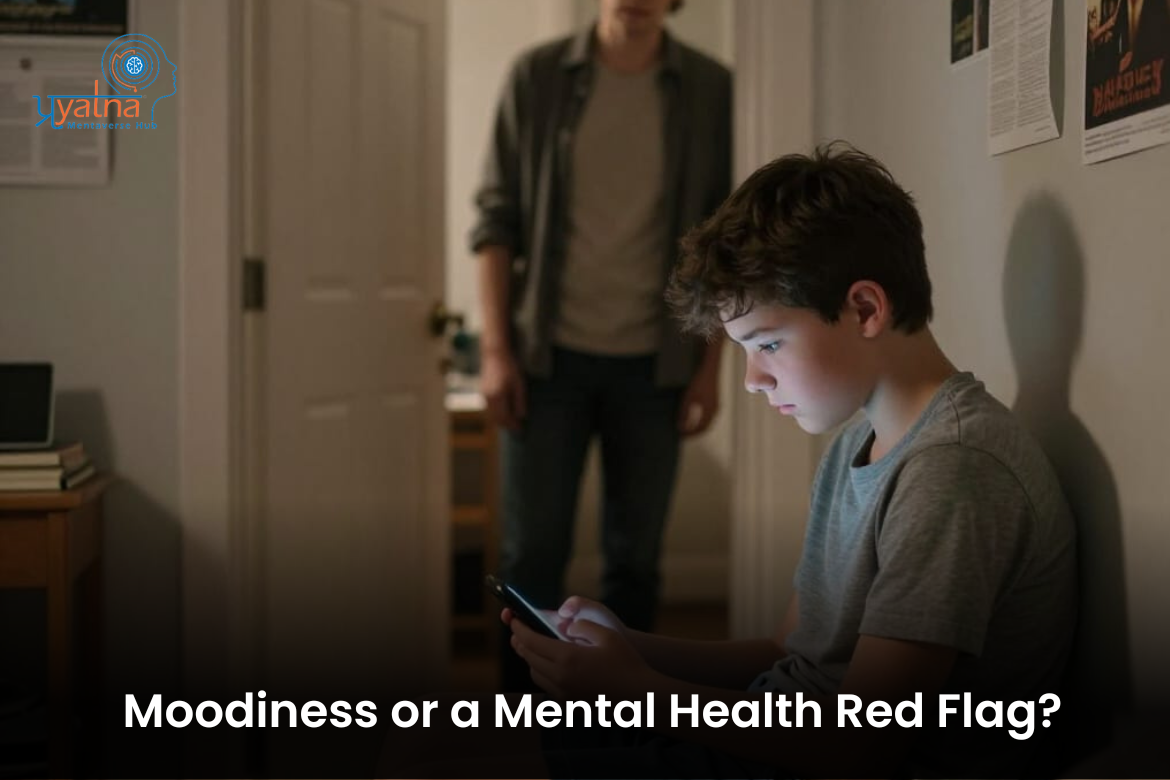
My Teen Stays Locked in the Room All Day — Is It Just Moodiness or a Mental Health Red Flag?
Introduction: The New Normal or a Warning Sign?
Many parents share the same concern:
- “My teenager stays in the room all day.”
- “They only come out for food and then go back to their phone.”
- “They used to talk… now it feels like I’m living with a stranger.”
The teenage years naturally bring emotional ups and downs, hormonal changes, increased screen use, and a strong need for independence.
But as a parent, it’s hard not to wonder:
👉 Is this normal teenage moodiness—or a sign of something deeper like teen isolation or depression?
Let’s break it down with clarity and care.
Why Teens Lock Themselves in Their Room
For many teenagers, their room becomes more than just a physical space. It turns into:
- A private zone
- A judgment-free space
- An escape from expectations and pressure
- A place where emotions feel safer
In this phase of life, privacy often equals control.
This alone doesn’t mean something is wrong—but the reason behind it matters.
Normal Behavior: Moodiness & the Need for Privacy
During adolescence, it’s common for teens to withdraw a little as they figure out who they are.
This usually happens when:
- Academic pressure feels overwhelming
- They’re exploring independence
- They’re going through an identity crisis (“Who am I? Where do I belong?”)
Signs this behavior is still within a healthy range:
- They come out for meals
- They talk to friends (online or offline)
- They respond when approached
- They participate in at least one family activity
Here, the room is a retreat, not a prison.
Red Flag Behavior: When Isolation Signals Mental Health Concerns
Teen isolation becomes concerning when it’s persistent, intense, and emotionally charged.
Compare the patterns:
| Normal Moodiness | 🚩 Red Flag for Mental Health |
|---|---|
| Wants privacy | Locked in room for hours or days |
| Uses phone for fun | Phone addiction replaces real connection |
| Talks when approached | Avoids conversation, shuts down |
| Mild irritation | Emotional numbness or withdrawal |
🔍 Look for pattern + duration.
If this behavior continues for 2 weeks or more, it may indicate:
- Depression in teens
- Social anxiety
- Ongoing identity crisis
- Low self-esteem
- Phone or gaming addiction
Why Phone Addiction Makes Teen Isolation Worse
A smartphone offers teens:
- Instant gratification
- Escape from real-life stress
- A false sense of connection (Reels, TikTok, gaming)
But excessive screen use can lead to:
- Reduced motivation
- Sleep disturbances
- Increased isolation
- Digital dopamine dependency
📱 Phone addiction can mimic symptoms of depression, making it easy for parents to mislabel serious emotional distress as “laziness” or “attitude.”
What Teens May Not Say—But Want You to Know
Behind the closed door, many teens are silently thinking:
- “I don’t know how to explain what I’m feeling.”
- “I’m scared of being judged.”
- “I don’t feel understood.”
Most teens don’t isolate because they dislike their parents.
They isolate because they don’t yet have the emotional tools to cope.
What Parents Can Do (Instead of Lecturing)
1. Replace Questions with Observations
Instead of:
❌ “Why are you always locked in your room?”
Try:
✅ “I’ve noticed you’ve been spending a lot of time alone. I’m here whenever you want to talk.”
This feels safer and less confrontational.
2. Set Collaborative Phone Boundaries
Avoid strict rules. Create agreements.
Example:
“Let’s keep phones out of bedrooms after 10 PM. I’ll do it too.”
This builds trust, not resistance.
3. Build Connection Through Parallel Activities
Teens open up while doing, not while being questioned.
Try:
- Evening walks
- Chai-time conversations
- Cooking together
- Music, workouts, or shared hobbies
4. Seek Therapy If Isolation Persists
A counselor can help teens explore:
- Identity issues
- Emotional regulation
- Screen dependency
- Social anxiety
🧠 Therapy is not a sign of weakness.
It’s a sign of prevention, care, and emotional safety.
When You Should Seek Professional Help Immediately
Reach out to a mental health professional if you notice:
- Sudden drop in grades
- Complete withdrawal from family or friends
- Changes in sleep or appetite
- Loss of interest in activities they once enjoyed
These are strong indicators of depression in teens and should not be ignored.
Final Thought for Parents
Teens don’t need perfect parents.
They need present, emotionally available ones.
Sometimes, the door they’re closing isn’t just their bedroom door—
it’s the door to their emotional world.
Your calm presence, patience, and willingness to listen
can be the key that reopens it.
At Prayatna Mentaverse Hub, we support teens and parents through these complex transitions—helping families move from confusion to connection.
Because every mind deserves care—especially during the most vulnerable years.
Related Posts

The Calm Before the Boards: A Parent’s Guide to a Stress-Free Exam Week (Board Exams 2026)
The Calm Before the Boards: A Parent’s Guide to a Stress-Free Exam Week (Board...

Sustainable Board Prep: Study Hard Without Burning Out (Smart Strategy for Board Exams 2026)
Sustainable Board Prep: Study Hard Without Burning Out (Smart Strategy for Board...

Speech Delay vs. Late Talker: How to Know the Difference and When to Seek Therapy
🌱 Why Your Child’s Speech Milestones Matter Every child develops at their own...

Why Your Child Isn’t Interested in Studies — And What You Can Do About It
Many parents worry when their child refuses to study, gets easily distracted, or...