
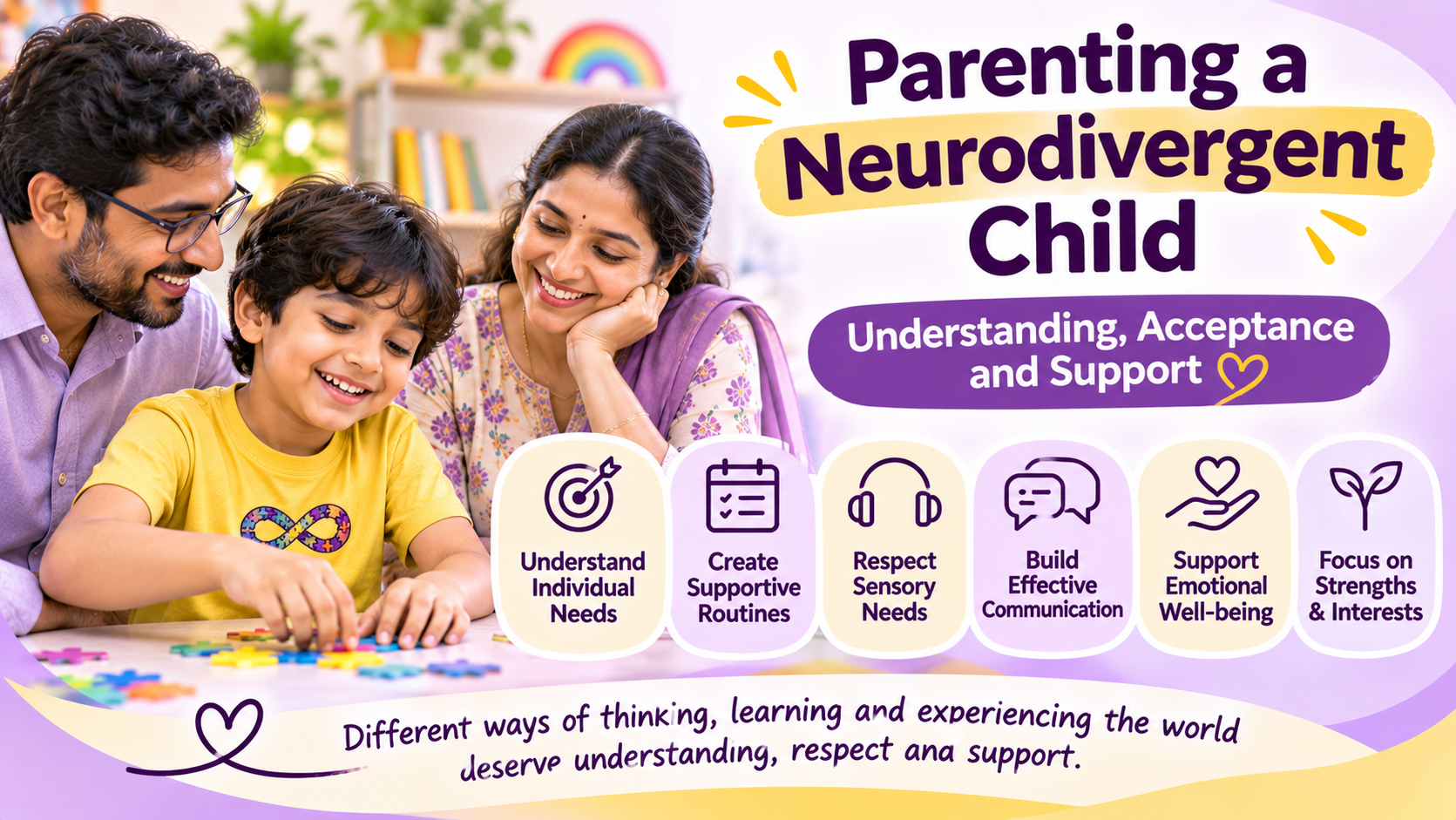
Parenting a Neurodivergent Child: Understanding, Acceptance and Support
Every child experiences the world differently. Some children communicate easily, while others may need more time or alternative ways to express themselves. Some enjoy busy environments, while others may find loud sounds, bright lights or crowded spaces overwhelming. Some learn through traditional classroom methods, while others benefit from a more individualised approach.
These differences are part of the diversity of human development.
If you are parenting a neurodivergent child, you may sometimes find yourself navigating questions about development, behaviour, communication, education, sensory experiences and everyday routines.
You may wonder why your child responds differently to certain situations, finds particular activities challenging or needs additional support with tasks that seem simple for other children.
It is important to remember that your child’s differences do not make them less capable, less valuable or less deserving of opportunities.
Parenting a Neurodivergent Child is not about changing who your child is. It is about understanding how they experience the world and helping them access the support they need to learn, grow and participate.
With understanding, acceptance, appropriate professional guidance and a supportive environment, parents can play an important role in their child’s developmental journey.
Let’s explore what neurodiversity means and how parents can support their neurodivergent children in everyday life.
What Does Neurodivergent Mean?
The term neurodivergent describes people whose brain functions, processes information or experiences the world in ways that differ from what is generally considered typical.
Neurodivergence is an umbrella term, not a medical diagnosis. It is commonly used in discussions about differences in learning, communication, attention, sensory processing and information processing.
Neurodivergence may include conditions or differences such as:
- Autism: May involve differences in social communication, interaction, sensory processing, interests and patterns of behaviour.
- ADHD: May involve differences in attention regulation, activity levels, impulse control and executive functioning.
- Dyslexia: A specific learning disorder that primarily affects reading-related skills.
- Dysgraphia: A term commonly used for significant difficulties with written expression, handwriting or related writing skills.
- Dyspraxia: Also known as developmental coordination disorder in clinical contexts, it can affect movement, coordination and motor planning.
- Dyscalculia: A specific learning disorder involving difficulties with mathematical skills.
These examples are not interchangeable, and each has its own characteristics and assessment considerations. Some children may have more than one neurodevelopmental condition or learning difference.
It is also important to understand that neurodivergent children are not all alike. Two children with the same diagnosis may have very different strengths, preferences, communication styles and support needs.
Understanding the individual child is more important than making assumptions based on a label.
Understanding Your Neurodivergent Child: Every Child Is Different
One of the most important steps in parenting a neurodivergent child is recognising that there is no single way to experience neurodivergence.
Some children may communicate verbally, while others may use gestures, pictures, communication devices or a combination of methods. Some may enjoy social interaction but need additional support with certain situations. Others may prefer predictable routines or quieter environments.
Parents may notice differences in several areas of everyday life.
1. Communication and Social Interaction
Some neurodivergent children may communicate or interact differently from their peers.
For example, a child may:
- Need additional time to respond to questions.
- Prefer direct and clear language.
- Use gestures, pictures or alternative communication methods.
- Find certain social situations confusing or tiring.
- Prefer interacting around shared interests.
- Express emotions or needs in different ways.
These differences should not automatically be interpreted as a lack of interest, understanding or affection.
Parents can support communication by observing how their child expresses themselves, allowing sufficient response time and respecting their preferred communication methods.
2. Sensory Processing Differences
Some neurodivergent children experience sensory information differently.
Everyday experiences such as loud noises, bright lights, clothing textures, food smells, crowded environments or unexpected touch may feel uncomfortable or overwhelming for some children.
Other children may actively seek movement, pressure or particular sensory experiences.
Parents may notice that their child:
- Covers their ears in noisy environments.
- Avoids certain clothing materials or food textures.
- Finds crowded places difficult to manage.
- Seeks movement or enjoys repetitive physical activities.
- Becomes uncomfortable when routines or environments change.
Understanding these sensory preferences and sensitivities can help parents identify possible triggers and make appropriate adjustments.
3. Learning and Attention Differences
Neurodivergent children may process information, organise tasks and approach learning differently.
Some children may benefit from visual instructions, repetition, additional processing time or learning through practical activities.
Others may find it difficult to maintain attention during certain tasks, organise their belongings or complete activities involving multiple steps.
These differences do not mean that a child lacks intelligence or the ability to learn. They may simply need teaching approaches that better match their learning profile.
4. Emotional Regulation and Behaviour
Some children may find it difficult to identify, communicate or manage their emotions, especially when they experience sensory overload, unexpected changes, communication difficulties or demanding situations.
Parents may notice:
- Difficulty managing frustration.
- Strong emotional responses to unexpected changes.
- Withdrawal from overwhelming situations.
- Difficulty transitioning between activities.
- Challenges expressing discomfort or asking for help.
Rather than immediately labelling these responses as misbehaviour, parents can explore what the child may be communicating through their actions.
7 Practical Parenting Strategies for a Neurodivergent Child
There is no universal parenting formula that works for every neurodivergent child. However, some practical approaches can help parents create a more supportive and understanding environment.
1. Understand Your Child’s Individual Strengths and Needs
Start by observing your child without comparing them with siblings, classmates or other children.
Notice what they enjoy, what makes them comfortable, what situations they find challenging and how they communicate their needs.
For example, your child may enjoy puzzles, music, building activities, drawing, numbers or learning about a particular subject.
Recognising these interests can help parents create opportunities for learning, interaction and confidence-building.
At the same time, understanding areas where your child needs support can help you seek appropriate guidance.
2. Create Predictable Routines
Some neurodivergent children feel more comfortable when they know what to expect.
Unexpected changes, transitions or unfamiliar activities may sometimes create uncertainty or distress.
Parents can support their children by:
- Maintaining reasonably consistent daily routines.
- Using visual schedules or picture cards where helpful.
- Giving advance notice before transitions.
- Explaining changes using simple and clear language.
- Allowing additional time to move between activities.
Remember that routines should provide support, not become rigid rules. Children may also need opportunities to gradually develop flexibility in ways that are comfortable and appropriate for them.
3. Respect Sensory Needs
Try to understand which sensory experiences your child enjoys and which ones may cause discomfort.
For example:
- Reduce unnecessary background noise when possible.
- Offer comfortable clothing options.
- Prepare your child before visiting unfamiliar or crowded places.
- Provide access to a quieter space when needed.
- Respect food preferences while discussing persistent nutritional concerns with an appropriate professional.
Some children may benefit from individualised sensory strategies recommended by an occupational therapist.
The goal is not to eliminate every sensory challenge, but to understand the child’s needs and help them participate comfortably and safely.
4. Communicate in a Way Your Child Understands
Communication is not limited to spoken words.
Some children may understand information better when it is presented visually, while others may benefit from shorter instructions, demonstrations or additional processing time.
Parents can try:
- Using clear and direct instructions.
- Breaking complicated instructions into smaller steps.
- Using pictures, gestures or visual reminders.
- Allowing time for the child to process information.
- Accepting different ways of expressing thoughts and needs.
- Checking understanding without repeatedly pressuring the child to respond.
If your child uses an alternative or augmentative communication method, respect and support that communication system.
5. Support Emotional Regulation with Patience
Children may need support to recognise their emotions and understand what helps them feel comfortable.
When your child is distressed, try to remain calm and reduce unnecessary demands or stimulation where possible.
Some helpful approaches include:
- Using a calm and reassuring voice.
- Acknowledging the child’s feelings.
- Offering appropriate space and time to recover.
- Identifying possible triggers after the situation has passed.
- Practising coping strategies when the child is calm.
During intense distress, lengthy explanations or arguments may not be helpful. Focus first on safety, comfort and reducing overwhelm.
If your child frequently experiences significant distress, seek guidance from a qualified professional to understand the underlying factors and suitable support strategies.
6. Encourage Independence at Your Child’s Own Pace
Independence does not mean expecting a child to complete every task without assistance.
It means providing opportunities to develop skills while respecting their abilities and support needs.
For example, parents can encourage children to:
- Choose between suitable clothing options.
- Participate in age-appropriate self-care activities.
- Put away toys or personal belongings.
- Follow simple daily routines.
- Communicate when they need help.
- Make choices about activities and interests.
Break activities into smaller steps and provide support where needed. Gradually adjust the level of assistance according to the child’s progress.
7. Celebrate Progress Without Comparing
Every child has their own developmental journey.
One child may make progress in communication, another in self-care, while another may become more comfortable participating in group activities.
Instead of measuring progress against age-mates or siblings, recognise meaningful achievements in your child’s own journey.
Celebrate effort, curiosity, communication, problem-solving and the development of new skills.
Progress does not always have to look the same for every child.
Why Early Identification and Professional Support Matter
Parents may sometimes notice developmental differences but feel unsure about whether to seek professional guidance.
It is important to remember that asking for an assessment does not mean something is wrong with your child. It can simply be a way to understand their developmental profile and identify support that may be helpful.
Professional assessment may help explore areas such as:
- Communication and language development.
- Social interaction and play.
- Attention and executive functioning.
- Sensory processing and everyday participation.
- Learning and academic skills.
- Motor coordination and self-care.
- Emotional and behavioural needs.
Depending on the concerns, parents may consult a paediatrician, developmental paediatrician, child psychologist, psychiatrist or another appropriately qualified professional.
Not every child needs the same assessments or interventions. Support should be based on the child’s individual needs rather than assumptions about a particular diagnosis.
For general information about developmental milestones and early identification, parents can visit the CDC’s Learn the Signs. Act Early. programme.
How Different Therapies Can Support Neurodivergent Children
Therapy should not be viewed as an attempt to make every child behave, communicate or learn in the same way.
Appropriate intervention focuses on meaningful goals, individual strengths, functional needs and the child’s well-being.
Depending on the child’s assessment and requirements, different forms of professional support may be considered.
1. Occupational Therapy
Occupational therapy may support children with everyday activities such as dressing, eating, handwriting, coordination, play and self-care.
It may also address functional challenges related to sensory experiences, motor skills and participation in daily routines.
The therapist develops individualised goals based on the child’s needs and everyday activities.
2. Speech and Language Therapy
Speech and language therapy may support children with speech, language and communication needs.
Depending on the child, support may involve understanding language, expressing needs, developing communication skills or exploring alternative and augmentative communication methods.
Communication support should respect the child’s individual communication style and should not focus only on spoken language.
3. Behavioural and Developmental Support
Some children may benefit from structured support to develop functional skills, communication, coping strategies and participation in everyday activities.
Interventions should be individualised, respectful and focused on the child’s well-being, safety and meaningful goals.
Support should avoid approaches that rely on shame, punishment or suppressing harmless differences simply to make a child appear more typical.
4. Remedial Education and Learning Support
Children who experience specific learning difficulties may benefit from individualised educational support.
Remedial education can help strengthen foundational academic skills, address learning gaps and introduce strategies suited to the child’s learning profile.
5. Counselling and Emotional Support
Children and families may sometimes need support with stress, emotional well-being, self-confidence, adjustment or family concerns.
Appropriate counselling can provide a supportive space to understand emotions, develop coping strategies and address individual concerns.
How Can Parents Work with Schools to Support Their Neurodivergent Child?
School is an important part of a child’s life. It is where children learn, build relationships, participate in group activities and develop new skills.
However, a traditional classroom environment may not always meet every child’s learning, communication or sensory needs without suitable adjustments.
Parents can work with teachers and school professionals to explore ways of making the learning environment more supportive.
Depending on the child’s needs, helpful strategies may include:
- Providing clear and structured instructions.
- Using visual schedules and reminders.
- Allowing appropriate processing time.
- Breaking longer assignments into smaller tasks.
- Making suitable adjustments to the classroom environment.
- Providing opportunities for movement or quiet breaks where appropriate.
- Encouraging peer understanding and respectful interactions.
- Maintaining communication between parents, teachers and relevant professionals.
In some situations, a child may benefit from additional individual support or a shadow teacher. Such decisions should be based on the child’s needs and discussed with the family, school and relevant professionals.
Inclusion is not simply about admitting a child into a classroom. It is about ensuring that the child has meaningful opportunities to learn, participate and feel respected.
Parenting Challenges: Remember to Take Care of Yourself Too
Parenting a neurodivergent child can involve appointments, school discussions, therapy sessions, daily planning and decisions about support.
Some parents may experience stress, uncertainty, exhaustion or feelings of isolation while navigating these responsibilities.
It is important to remember that parents also need understanding and support.
1. Avoid Comparing Your Child with Others
Every child develops differently. Comparing your child’s milestones, communication or learning progress with other children may create unnecessary pressure.
Focus on your child’s individual progress and needs.
2. Ask for Help When You Need It
You do not have to manage every challenge alone. Reach out to family members, trusted friends, parent support groups or qualified professionals when additional support is needed.
3. Make Time for Your Own Well-Being
Try to make space for rest, hobbies, physical activity or activities that help you feel refreshed.
Looking after your own well-being can help you manage parenting responsibilities more sustainably.
4. Build a Supportive Network
Connecting with other parents who understand similar experiences may help reduce feelings of isolation.
Choose support networks that respect different experiences and avoid making comparisons or offering unqualified medical advice.
5. Recognise Your Own Efforts
Parenting does not require perfection. There may be difficult days, unanswered questions and changing needs.
Recognise the care, effort and commitment you bring to your child’s journey.
Common Parenting Myths About Neurodivergent Children
Misunderstandings about neurodivergence can create unnecessary pressure for children and families. Let’s address some common myths.
Myth 1: All Neurodivergent Children Are the Same
Reality: Neurodivergent children have different strengths, personalities, preferences and support needs. Even children with the same diagnosis can have very different experiences.
Myth 2: A Child Will Outgrow Every Developmental Difference
Reality: Neurodevelopmental differences may continue throughout life, although skills, coping strategies and support needs can change as a child grows.
Myth 3: Neurodivergence Is Caused by Poor Parenting
Reality: Neurodevelopmental conditions are not simply caused by parenting style or a lack of discipline. Parents should not blame themselves for their child’s developmental differences.
Myth 4: Every Neurodivergent Child Needs the Same Therapy
Reality: Support should be based on individual assessment, goals, preferences and functional needs. Not every child requires the same intervention.
Myth 5: Independence Means Doing Everything Without Help
Reality: Independence can include making choices, communicating needs, participating in activities and using appropriate support. Needing assistance does not reduce a child’s abilities or worth.
Creating a Supportive Environment: Small Changes Can Make a Difference
Parents do not need to make every change at once. Small, thoughtful adjustments can help children feel more comfortable and supported in everyday situations.
Consider the following:
- Observe what helps your child feel comfortable and safe.
- Respect their communication and sensory preferences.
- Provide predictable routines where helpful.
- Offer choices and opportunities for decision-making.
- Allow additional time for transitions and tasks.
- Recognise individual strengths and interests.
- Work with teachers and professionals when support is needed.
- Protect your child’s privacy and dignity.
A supportive environment does not mean removing every challenge. It means understanding barriers and providing reasonable support so that children can participate and develop meaningful skills.
How Prayatna Mentaverse Supports Children and Families
At Prayatna Mentaverse, we believe that every child deserves to be understood, accepted and supported.
We recognise that every developmental journey is different. Children may have different communication styles, learning preferences, sensory experiences and support requirements.
Depending on the child’s individual needs, families may explore support such as:
- Occupational Therapy.
- Speech and Language Therapy.
- Behavioural Therapy.
- Remedial Education.
- Counselling and developmental support.
Our approach encourages parents to understand their child’s strengths, recognise areas where support may be helpful and explore appropriate professional guidance.
We also believe that collaboration between parents, teachers and therapists can help create more consistent support across home, school and therapy environments.
If you have concerns about your child’s development, communication, learning, sensory experiences or emotional well-being, seeking professional guidance can be a helpful first step.
Connect with Prayatna Mentaverse to explore the support that may be appropriate for your child’s developmental journey.
Every Mind Deserves Care.
Frequently Asked Questions (FAQs)
1. What does it mean to parent a neurodivergent child?
Parenting a neurodivergent child involves understanding the child’s individual ways of learning, communicating and experiencing the world. It includes recognising their strengths, understanding their support needs and creating an environment where they can participate and develop with confidence.
2. What are the signs that a child may be neurodivergent?
Possible signs may include differences in communication, social interaction, attention, sensory processing, learning, coordination or behaviour. These signs vary between children and do not automatically indicate a particular diagnosis. A qualified professional can help assess developmental concerns.
3. How can I support my neurodivergent child at home?
Parents can provide predictable routines, respect sensory needs, use communication methods suited to the child, offer age-appropriate choices and celebrate individual progress. Strategies should be adapted to the child’s preferences and support needs.
4. Should I tell my child’s school about their neurodivergence?
Sharing relevant information with appropriate school staff can help them understand the child’s needs and explore suitable support. Parents should discuss what information needs to be shared, with whom and for what purpose, while respecting the child’s privacy.
5. Does every neurodivergent child need therapy?
No. Support depends on the child’s individual needs, preferences and everyday challenges. Some children may benefit from specific therapies or educational support, while others may need environmental adjustments or different forms of assistance.
6. Can neurodivergent children become independent?
Yes. Neurodivergent children can develop independence in different ways and at their own pace. The appropriate goal is to support meaningful participation, decision-making, self-advocacy and everyday skills while respecting individual support needs.
7. How do I explain neurodivergence to my child?
Use age-appropriate, positive and simple language. Explain that people learn, communicate and experience the world differently. Focus on your child’s strengths and help them understand that needing support does not make them less capable or valuable.
8. How can parents manage stress while raising a neurodivergent child?
Parents can seek support from trusted people, connect with supportive parent communities, take time for their own well-being and consult qualified professionals when needed. Asking for help is an important part of caring for both the child and the family.
9. What is the difference between neurodivergent and neurotypical?
Neurodivergent generally describes people whose neurological development or information processing differs from what is considered typical. Neurotypical describes people whose neurological development and functioning align more closely with commonly expected patterns. These terms are broad descriptors, not diagnoses.
10. Can a child have more than one neurodevelopmental condition?
Yes. Some children may have co-occurring neurodevelopmental conditions or learning differences. Appropriate assessment can help identify their individual profile and guide support.
Conclusion: Understand Your Child, Celebrate Their Journey
Parenting a neurodivergent child comes with its own questions, learning experiences and responsibilities. There may be days when things feel challenging, but there can also be meaningful moments of discovery, connection and progress.
Your child does not need to follow someone else’s developmental path to have a fulfilling and meaningful future.
They need opportunities to learn, communicate, explore their interests and participate in the world in ways that work for them.
As a parent, your role is not to make your child fit every expectation. It is to understand their needs, recognise their strengths, advocate for appropriate support and help create an environment where they feel accepted.
Different ways of thinking, learning and experiencing the world deserve understanding, respect and support.
Because every child deserves to be seen for who they are, not just for the challenges they experience.
Disclaimer
This article is intended for general educational purposes and does not replace professional assessment, diagnosis, therapy or individualised healthcare advice. Neurodevelopmental conditions and support needs vary from child to child. Parents should consult appropriately qualified professionals for concerns about their child’s development or well-being.