

When Should Parents Seek Professional Help for Academic Avoidance?
When Should Parents Seek Professional Help for Academic Avoidance?
“Not every child who avoids studies is being stubborn — sometimes they are silently struggling.”
It is normal for children to occasionally resist homework or lose focus. Every child has off days.
But when academic avoidance becomes consistent, intense, or emotionally charged, it is important for parents to pause and observe more closely.
Understanding the difference between normal resistance and deeper learning or emotional challenges can prevent long-term academic stress.
What Is Academic Avoidance?
Academic avoidance happens when a child:
- Regularly delays homework
- Gets distracted within minutes
- Refuses to sit for studies
- Shows emotional reactions before study time
- Avoids school-related discussions
Occasional resistance is normal.
Persistent avoidance may signal something deeper.
First Measures to Try at Home
Before seeking professional help, parents can start with simple, structured strategies.
Consistency is key. Small changes often make a big difference.
1. Create a Fixed Study Routine
- Choose a realistic daily study time.
- Start with short blocks (20–30 minutes).
- Keep timing consistent every day.
Children feel safer and more cooperative when routines are predictable.
2. Reduce Distractions
- Turn off the TV.
- Keep mobile phones away.
- Set up a calm, clutter-free study corner.
A peaceful environment improves focus and reduces frustration.
3. Break Tasks into Small Steps
Instead of saying, “Finish everything,” try:
- Complete 3 math problems.
- Read one paragraph.
- Write 5 sentences.
Small wins build confidence.
4. Encourage Effort, Not Just Marks
Instead of asking:
“Why did you score less?”
Say:
“I noticed you tried hard today.”
Effort-based praise strengthens motivation and self-esteem.
5. Check Basic Needs
Before blaming behavior, ask:
- Is my child getting enough sleep?
- Are they eating properly?
- Do they have downtime to relax and play?
A tired or overwhelmed child cannot focus effectively.
6. Maintain Calm Communication
Avoid:
- Comparison with siblings or classmates
- Harsh criticism
- Threat-based discipline
Calm communication builds emotional safety. Emotional safety builds cooperation.
Give It Time
Implement these changes consistently for 4–6 weeks.
Many children show improvement when routine, structure, and emotional support are strengthened.
When to Seek Professional Help for Academic Avoidance
If structured home strategies do not bring improvement, or if you notice the following signs, it may be time to consult a child psychologist or learning specialist.
Warning Signs to Watch:
- Extreme anxiety or crying before study time
- Frequent stomach aches or headaches during school
- Inability to focus beyond a few minutes
- Poor memory retention despite repeated practice
- Falling grades despite visible effort
- Low self-esteem (“I am dumb,” “I can’t do anything”)
- Behavioral outbursts specifically linked to homework
These are not signs of laziness.
They may indicate:
- Attention difficulties (ADHD symptoms)
- Learning disorders (Dyslexia, Dyscalculia, Dysgraphia)
- Performance anxiety
- Emotional stress
- School-related anxiety
Early intervention leads to better outcomes.
Why Early Professional Guidance Matters
When academic avoidance is misunderstood, children may:
- Lose confidence
- Develop school anxiety
- Feel labeled as “lazy” or “careless”
- Avoid challenges long-term
Professional assessment provides clarity.
Clarity reduces frustration — for both parents and children.
Counselling and educational assessments can help:
- Identify learning challenges
- Improve attention and focus
- Strengthen emotional regulation
- Build study skills
- Restore confidence
Academic Avoidance Is Communication
When a child avoids studies, they are not rejecting education.
They are communicating:
- “This feels too hard.”
- “I am overwhelmed.”
- “I am scared of failing.”
- “I don’t understand, but I don’t know how to say it.”
Listening before reacting makes all the difference.
Final Takeaway
If structured support at home does not ease academic avoidance, seeking professional help is not a label.
It is clarity.
And clarity turns confusion into understanding — and understanding into progress.
Your child is not stubborn.
They may simply need the right support.
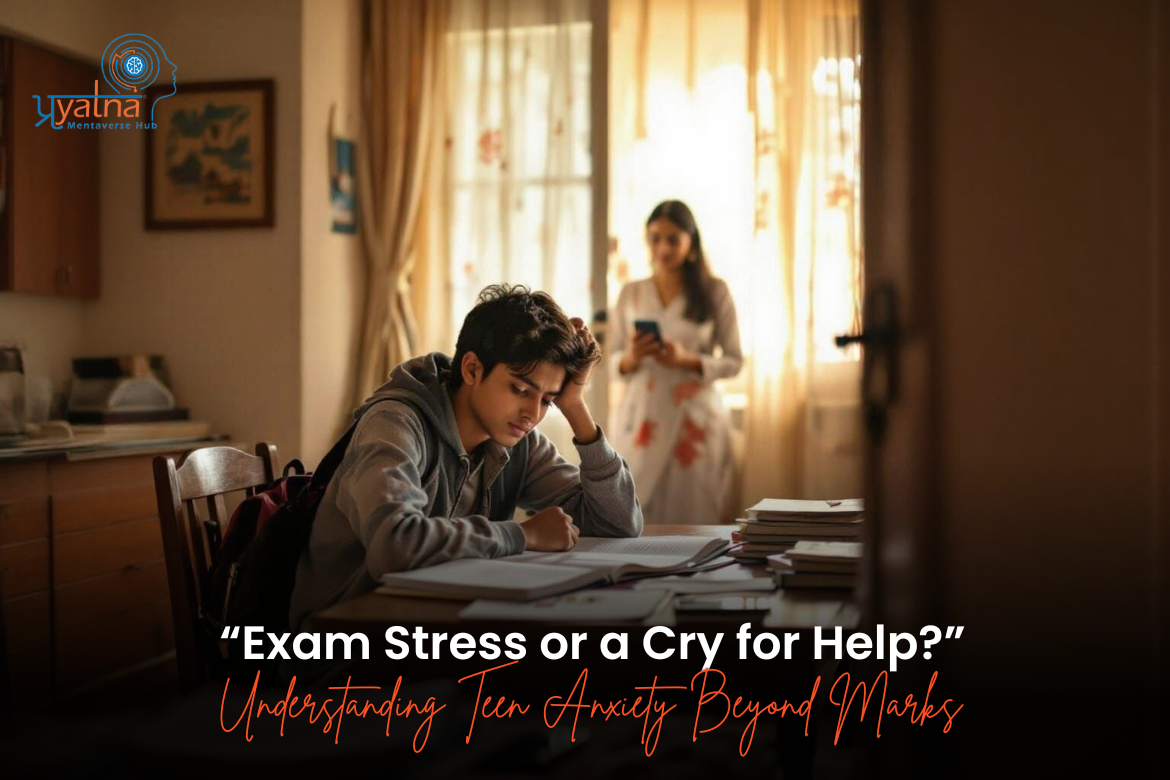
Exam Anxiety, Fear of Failure & Study Pressure: How to Build Emotional Resilience in Students
Why Are Students Breaking Down More Today?
Today’s children are not lacking intelligence — they are lacking emotional resilience.
They are growing up in a world where:
- Marks = Identity
- Performance = Worth
- Comparison = Constant
Statements like:
“Itna bhi nahi kar sakta?”
“Sharma ji’s son scored 95%.”
don’t motivate — they intimidate.
Over time, students start believing:
👉 “If I fail, I am a failure.”
This belief fuels exam stress, school anxiety, lack of focus, and fear of failure — even in capable students.
What Is Exam Anxiety?
Exam anxiety is when a child knows the answers at home but freezes during exams.
Common signs of exam anxiety and school stress:
- Lack of focus while studying
- Racing or blank thoughts during tests
- Sweaty palms, stomach aches, headaches
- Low study motivation
- Panic before or during exams
This is not laziness or attitude.
It is school anxiety, and it needs understanding — not pressure.
The Real Root Cause: Fear of Failure
Most students are not afraid of exams.
They are afraid of:
- Disappointing parents
- Being judged or compared
- Not getting into a “good” college
- Feeling “not good enough”
📌 Exams don’t destroy confidence. Fear of failure does.
When fear dominates, the brain shifts into survival mode — making focus, memory, and calm thinking difficult.
How Emotional Resilience Changes Everything
Emotional resilience means:
“I can handle challenges, even if things don’t go my way.”
Resilient students are able to:
- Bounce back from mistakes
- Manage exam stress calmly
- Stay motivated despite pressure
- Improve focus and confidence
This skill builds lifelong success, not just exam scores.
How to Build Emotional Resilience in Students
1️⃣ Focus on Effort, Not Marks
Instead of:
❌ “What did you score?”
Say:
✅ “How much effort did you put in today?”
Children perform better when effort is valued over numbers.
2️⃣ Teach Study Discipline, Not Study Hours
Long sitting doesn’t equal productivity.
Use the Pomodoro Technique:
- 45 minutes focused study
- 10 minutes break
- Repeat
This improves lack of focus, attention span, and study motivation.
3️⃣ Normalize Failure
Tell your child:
“Marks do not define your future. Skills do.”
Every setback teaches:
- Self-awareness
- Better strategies
- Discipline
Failure is feedback — not a verdict.
4️⃣ Remove Comparison
Comparison increases exam stress and kills motivation.
Replace:
❌ “Your friend finished the syllabus already.”
With:
✅ “Everyone grows at their own pace.”
5️⃣ Create a Calm Study Environment
Small changes reduce school anxiety:
- Declutter the study table
- Keep phones away during study
- Use the same study spot daily
Predictability helps the brain feel safe and focused.
6️⃣ Teach Emotional Labeling
When children can name emotions, anxiety reduces.
Example:
➡ “I feel stressed because I think I’ll forget everything.”
Acknowledging emotions improves clarity and concentration.
7️⃣ Breathing for Instant Calm
Before studying or exams:
- Inhale for 4 seconds
- Hold for 2 seconds
- Exhale slowly for 6 seconds
This resets the nervous system and reduces panic.
Parents: Your Words Become Their Inner Voice
Instead of:
❌ “Don’t waste my money on tuition.”
Say:
✅ “Let’s find a study style that works for you.”
Emotional safety builds performance.
When Should You Consider Counseling Support?
Seek professional guidance if your child shows:
- Frequent headaches or stomach aches before school
- Panic or blank mind during exams
- Sleep disturbance before tests
- Loss of interest in studies
- Persistent crying or irritability
Counselling helps students:
- Manage exam stress
- Reduce fear of failure
- Improve focus and study motivation
- Build emotional resilience and confidence
At Prayatna Mentaverse Hub, we support students through counselling, emotional regulation techniques, and parent guidance.
Final Thought
Marks show memory.
Resilience shows character.
And character builds success — not one report card.
Help your child say:
“I am capable. I am enough. I can handle this.”
Because every mind deserves care — especially under pressure.
Learn More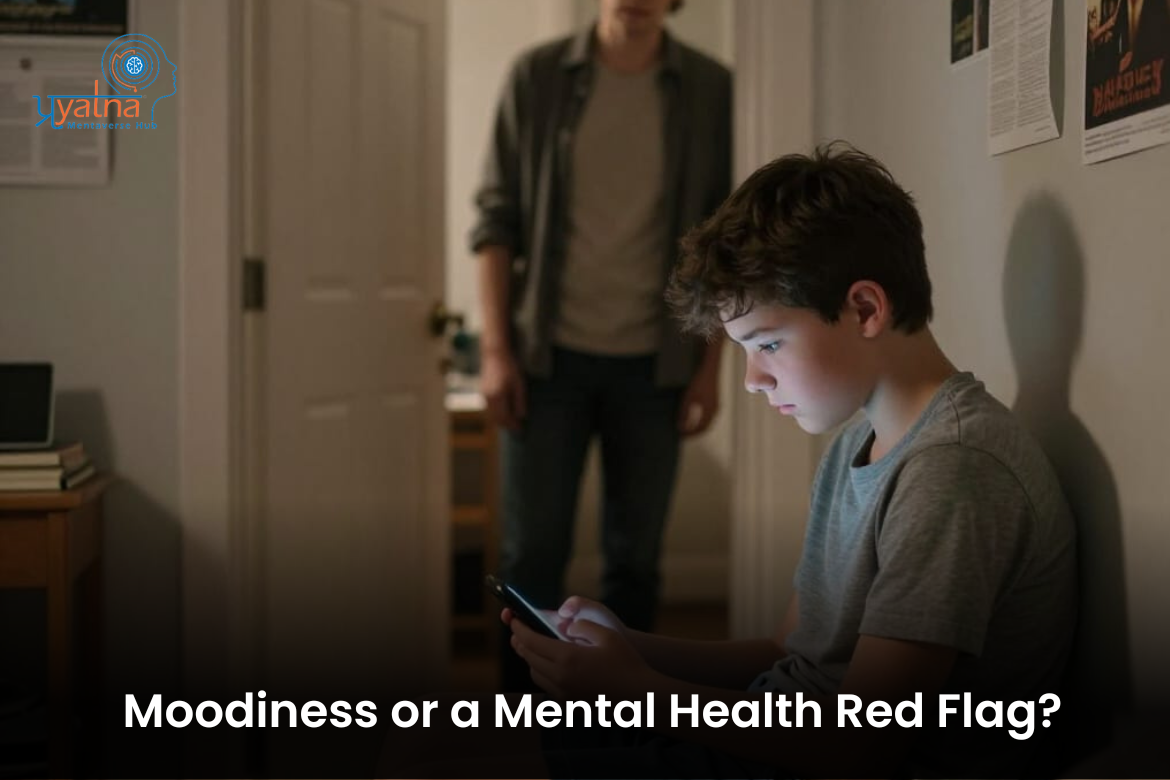
My Teen Stays Locked in the Room All Day — Is It Just Moodiness or a Mental Health Red Flag?
Introduction: The New Normal or a Warning Sign?
Many parents share the same concern:
- “My teenager stays in the room all day.”
- “They only come out for food and then go back to their phone.”
- “They used to talk… now it feels like I’m living with a stranger.”
The teenage years naturally bring emotional ups and downs, hormonal changes, increased screen use, and a strong need for independence.
But as a parent, it’s hard not to wonder:
👉 Is this normal teenage moodiness—or a sign of something deeper like teen isolation or depression?
Let’s break it down with clarity and care.
Why Teens Lock Themselves in Their Room
For many teenagers, their room becomes more than just a physical space. It turns into:
- A private zone
- A judgment-free space
- An escape from expectations and pressure
- A place where emotions feel safer
In this phase of life, privacy often equals control.
This alone doesn’t mean something is wrong—but the reason behind it matters.
Normal Behavior: Moodiness & the Need for Privacy
During adolescence, it’s common for teens to withdraw a little as they figure out who they are.
This usually happens when:
- Academic pressure feels overwhelming
- They’re exploring independence
- They’re going through an identity crisis (“Who am I? Where do I belong?”)
Signs this behavior is still within a healthy range:
- They come out for meals
- They talk to friends (online or offline)
- They respond when approached
- They participate in at least one family activity
Here, the room is a retreat, not a prison.
Red Flag Behavior: When Isolation Signals Mental Health Concerns
Teen isolation becomes concerning when it’s persistent, intense, and emotionally charged.
Compare the patterns:
| Normal Moodiness | 🚩 Red Flag for Mental Health |
|---|---|
| Wants privacy | Locked in room for hours or days |
| Uses phone for fun | Phone addiction replaces real connection |
| Talks when approached | Avoids conversation, shuts down |
| Mild irritation | Emotional numbness or withdrawal |
🔍 Look for pattern + duration.
If this behavior continues for 2 weeks or more, it may indicate:
- Depression in teens
- Social anxiety
- Ongoing identity crisis
- Low self-esteem
- Phone or gaming addiction
Why Phone Addiction Makes Teen Isolation Worse
A smartphone offers teens:
- Instant gratification
- Escape from real-life stress
- A false sense of connection (Reels, TikTok, gaming)
But excessive screen use can lead to:
- Reduced motivation
- Sleep disturbances
- Increased isolation
- Digital dopamine dependency
📱 Phone addiction can mimic symptoms of depression, making it easy for parents to mislabel serious emotional distress as “laziness” or “attitude.”
What Teens May Not Say—But Want You to Know
Behind the closed door, many teens are silently thinking:
- “I don’t know how to explain what I’m feeling.”
- “I’m scared of being judged.”
- “I don’t feel understood.”
Most teens don’t isolate because they dislike their parents.
They isolate because they don’t yet have the emotional tools to cope.
What Parents Can Do (Instead of Lecturing)
1. Replace Questions with Observations
Instead of:
❌ “Why are you always locked in your room?”
Try:
✅ “I’ve noticed you’ve been spending a lot of time alone. I’m here whenever you want to talk.”
This feels safer and less confrontational.
2. Set Collaborative Phone Boundaries
Avoid strict rules. Create agreements.
Example:
“Let’s keep phones out of bedrooms after 10 PM. I’ll do it too.”
This builds trust, not resistance.
3. Build Connection Through Parallel Activities
Teens open up while doing, not while being questioned.
Try:
- Evening walks
- Chai-time conversations
- Cooking together
- Music, workouts, or shared hobbies
4. Seek Therapy If Isolation Persists
A counselor can help teens explore:
- Identity issues
- Emotional regulation
- Screen dependency
- Social anxiety
🧠 Therapy is not a sign of weakness.
It’s a sign of prevention, care, and emotional safety.
When You Should Seek Professional Help Immediately
Reach out to a mental health professional if you notice:
- Sudden drop in grades
- Complete withdrawal from family or friends
- Changes in sleep or appetite
- Loss of interest in activities they once enjoyed
These are strong indicators of depression in teens and should not be ignored.
Final Thought for Parents
Teens don’t need perfect parents.
They need present, emotionally available ones.
Sometimes, the door they’re closing isn’t just their bedroom door—
it’s the door to their emotional world.
Your calm presence, patience, and willingness to listen
can be the key that reopens it.
At Prayatna Mentaverse Hub, we support teens and parents through these complex transitions—helping families move from confusion to connection.
Learn MoreBecause every mind deserves care—especially during the most vulnerable years.

Why Your Child Isn’t Interested in Studies — And What You Can Do About It
Many parents worry when their child refuses to study, gets easily distracted, or throws tantrums during homework time. You may have asked yourself:
“Why can’t my child focus?”
“Is this stubbornness or something deeper?”
“Why does study time always end in frustration?”
The truth is — a lack of interest in studies is rarely a discipline issue.
It’s often a signal of an unmet emotional, developmental, or sensory need.
At Prayatna Mentaverse Hub, we help parents look beyond behavior and understand what the child is trying to communicate through their actions.
Understanding the Real Reasons Behind Study Avoidance
Children don’t avoid studies because they’re lazy. They avoid it because studying feels difficult, boring, uncomfortable, or emotionally overwhelming.
Let’s understand what could really be happening behind your child’s “study refusal.”
1. Lack of Concentration & Attention Difficulties
If your child:
-
Can’t sit for more than a few minutes
-
Gets distracted by even the smallest sounds
-
Keeps fidgeting or leaves their seat often
…these may be signs of attention difficulties or ADHD-like behaviors.
Common signs to observe:
✔️ Rushes through homework
✔️ Forgets instructions
✔️ Starts one task and jumps to another
🧠 Concentration is not an inborn skill — it develops gradually with practice, patience, and the right environment.
2. Learning Difficulties Can Make Studies Feel Hard
A child who seems smart but struggles with reading, writing, or math may not be avoiding studies — they may be struggling to keep up.
Possible signs:
-
Reads slowly or skips words
-
Confuses letters (b/d, p/q)
-
Has difficulty understanding math concepts
These challenges may be related to:
📘 Dyslexia (Reading difficulty)
📗 Dyscalculia (Math difficulty)
📙 Dysgraphia (Writing difficulty)
When learning feels like a constant struggle, children disconnect to protect their self-esteem.
3. Emotional Resistance & Behavioral Struggles
Sometimes, “I don’t want to study!” is not about studies at all.
Children may express frustration, anxiety, or fear of failure through anger, crying, or refusal to work.
You might notice:
💢 Tantrums during homework
💢 Throwing books or pencils
💢 Saying “I hate homework” frequently
📍 Tantrums are not defiance — they’re a sign of emotional overload.
4. Sensory Needs: The Hidden Reason Many Parents Miss
Some children have sensory sensitivities that affect how they learn and concentrate.
For example:
-
Chair texture feels uncomfortable
-
Pencil pressure feels “too much”
-
Tube light sound or fan noise distracts them
This can lead to:
🚶♀️ Wiggling and restlessness
✍️ Poor handwriting
📄 Avoidance of worksheets
🌈 A sensory-seeking child needs movement before they can focus — not punishment.
5. Emotional Disconnection from Parents or Teachers
When children associate studying with fear, pressure, or criticism, motivation disappears.
Phrases like:
❌ “Why can’t you do this?”
❌ “No screen time until you finish!”
❌ “Your sibling does better than you!”
…only create emotional distance.
💬 Pressure kills motivation. Connection builds it.
Early Warning Signs Parents Should Observe
🔹 Avoids study area or homework corner
🔹 Fights or cries during homework
🔹 Complains of headache or stomachache before studying
🔹 Says “I can’t do this” often
🔹 Overreacts to small corrections
If studying affects your child’s confidence and emotional health, learning stops.
What Parents Can Do — Practical Strategies
Here are a few simple but powerful strategies you can try at home 👇
✅ 1. Break Study Time into Small Chunks
Try 20 minutes of study followed by a 5-minute break — the Pomodoro method for kids.
✅ 2. Use Movement-Based Learning
For restless children:
-
Let them stand and write on a whiteboard
-
Use finger tracing for letters
-
Walk and spell aloud
✅ 3. Provide Sensory Tools
Support focus with:
-
Stress balls
-
Weighted lap cushions
-
Fidget toys or chewy tubes
🎯 The goal is not to stop movement — it’s to regulate it.
✅ 4. Focus on Effort, Not Mistakes
Instead of:
“Why did you get this wrong?”
Say:
“I love how hard you tried — let’s find another way!”
Positive reinforcement strengthens motivation.
✅ 5. Reduce Screen Stimulation Before Study
Screens overstimulate the brain, reducing attention. Try switching off gadgets 30 minutes before study time.
When Should You Seek Professional Guidance?
Seek expert help if:
🚩 Homework is a daily battle
🚩 Child avoids books or study consistently
🚩 You notice attention, sensory, or learning difficulties
A Child Psychologist or Occupational Therapist at Prayatna Mentaverse Hub can help identify:
-
Attention or focus challenges
-
Learning difficulties (Dyslexia, Dyscalculia, Dysgraphia)
-
Sensory processing or emotional needs
💚 Early support prevents low confidence, academic anxiety, and behavior issues later in life.
Final Message to Parents
Your child isn’t lazy — they’re communicating through behavior.
When you shift your question from:
“Why aren’t you studying?”
to
“What is making studying hard for you?”
You open the door to understanding, connection, and real learning. 🌿
At Prayatna Mentaverse Hub, we believe:
Learn More“Every child learns differently — and every mind deserves care.”

Rising Violence Among Gujarat’s Youth: Causes, Impacts, and Solutions
આજના સમયમાં કિશોરોમાં હિંસક વર્તનનું પ્રમાણ વધવાનું મુખ્ય કારણ તમે શું માનો છો?
કિશોરોમાં હિંસક વર્તન પાછળ ઘણા કારણો જબાવદાર છે. બાળકની આસપાસનું વાતાવરણ, ઘર, શાળા, માતા-પિતા, મિત્રો, તેની સાથે જોડાયેલ દરેક વ્યક્તિ કહી શકાય. કોઈ એક પરિબળ આની પાછળ કામ કરતું નથી. બાળક શું જોવે છે, શું ખાય છે, શું શીખે છે, શાળામાં કેવાં વાતાવરણમાં રહે છે, ઘરમાં કેવાં પ્રકારનું વાતાવરણ છે, માતા-પિતા બાળકને કેટલો સમય આપે છે આ બધાં જ પરિબળો બાળકનાં દરેક પ્રકારના વર્તન માટે જવાબદાર છે. માત્ર હિંસક જ નહીં, બાળકના સારા-ખોટાં દરેક વર્તન પાછળ આવા અનેક પરિબળો જવાબદાર છે.
સોશિયલ મીડિયા અને વિડીયો ગેમ્સનો હિંસક વર્તન પર શું પ્રભાવ પડે છે?
હા, આ બધી વસ્તુઓનો પ્રભાવ તો છે જ, એને નકારી શકાય નહીં. આ બાબતમાં પેરેન્ટિંગ કંટ્રોલનો મુખ્ય રોલ સામે આવે છે. બાળક ટીવીમાં કે ફોનમાં કે સોશિયલ મીડિયા પર શું જુએ છે અને તેમાંથી શું શીખે છે એ બાબત મુખ્ય રોલ ભજવે છે. બાળકો ઘણી બધી હિંસક વિડીયો ગેમ્સ રમતા હોય છે, જેના કારણે તેનામાં રહેલું એગ્રેશન વધવાનું છે. ધણી વખત આનાથી ઊંધું પણ હોય છે. બાળક ખૂબ જ શાંત હોય છે. ત્યારે ઘણી વખત તેનું એગ્રેશન અંદરને અંદર વધતું હોય છે, જે એકાદ દિવસ જ્વાળામુખીની જેમ ફાટે છે.
મારી પાસે આવેલા એક કેસની વાત કરું તો, એક ૧૩ વર્ષની છોકરી સતત પોતાની સરખામણી સોશિયલ મીડિયા ઇન્ફ્લુએન્સર્સ સાથે કરવા લાગી. તેને લાગતું કે તે કદરૂપી છે કારણ કે તે તેમના જેવી દેખાતી નથી. સમય જતાં, એ છોકરીએ ફ્રેન્ડસની બર્થડે પાર્ટીઓમાં, શાળાના પ્રવાસોમાં અને કૌટુંબિક કાર્યક્રમોમાં જવાનું બંધ કરી દીધું. ઘણીવાર એ એકલી-એકલી રૂમમાં રડતી. એના શિક્ષકોએ જોયું કે તે છોકરી વર્ગમાં એકલી પડી ગઈ હતી, પ્રવૃત્તિઓમાં ભાગ લેતી નથી અને તેના ગ્રેડ ઘટી રહ્યા છે. શાળાએ તેના માતા-પિતાને જાણ કરી. પણ માતા-પિતાએ કાઉન્સિલિંગની વાતને ફગાવી દેતા કહ્યું કે, “અમારી છોકરી ફક્ત કિશોરાવસ્થામાંથી પસાર થઈ રહી છે. દરેક વ્યક્તિ મૂડ સ્વિંગમાંથી પસાર થાય છે.” પરિસ્થિતિ ત્યારે પ્રકાશમાં આવી જ્યારે તેના ઇન્સ્ટાગ્રામ વર્તુળના એક મિત્રએ તેના માતા-પિતાને ખાનગીમાં સંદેશ મોકલ્યો અને ચિંતા વ્યક્ત કરી. પછી માતા-પિતા મારી પાસે આવ્યા.